This week marked the end of an era.
I am in the process of transitioning to a new role, and I will share more about that soon. As part of that transition, I delivered what will likely be my final class in this program, a three-day remote cybersecurity session. Keeping an audience engaged for three full days over a remote format is never easy, which made this one feel like the right opportunity to try something different.
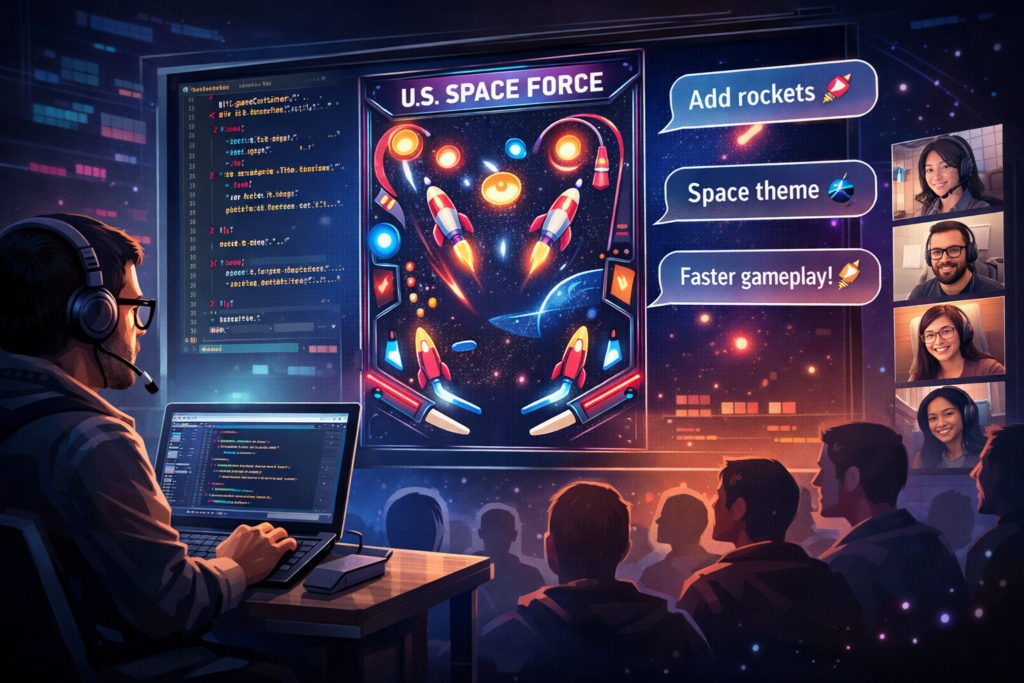
After delivering more than 200 cybersecurity classes over the years, I wanted to approach this one with a slightly different mindset.
At the start of the class, I asked a simple question: who here has tried vibe coding?
To make the point tangible, I opened up VS Code and used Claude to generate a basic HTML pinball game on the spot. Nothing polished, just something visual and interactive. The goal was not the game itself, it was to show how quickly ideas can turn into something real.
That simple demo turned into something unexpected.
Throughout the class, I started asking the attendees for ideas. New features, tweaks, themes, anything they wanted to see. Sometimes at the start of a session, sometimes at the end. It became a running side project, shaped in real time by the group.
In full transparency, I spent a bit of time in the evenings cleaning things up and smoothing out rough edges, but the core of the project came directly from that shared input.
What we ended up with is a small but surprisingly fun game that works well on both desktop and mobile:
PLAY HERE NOW
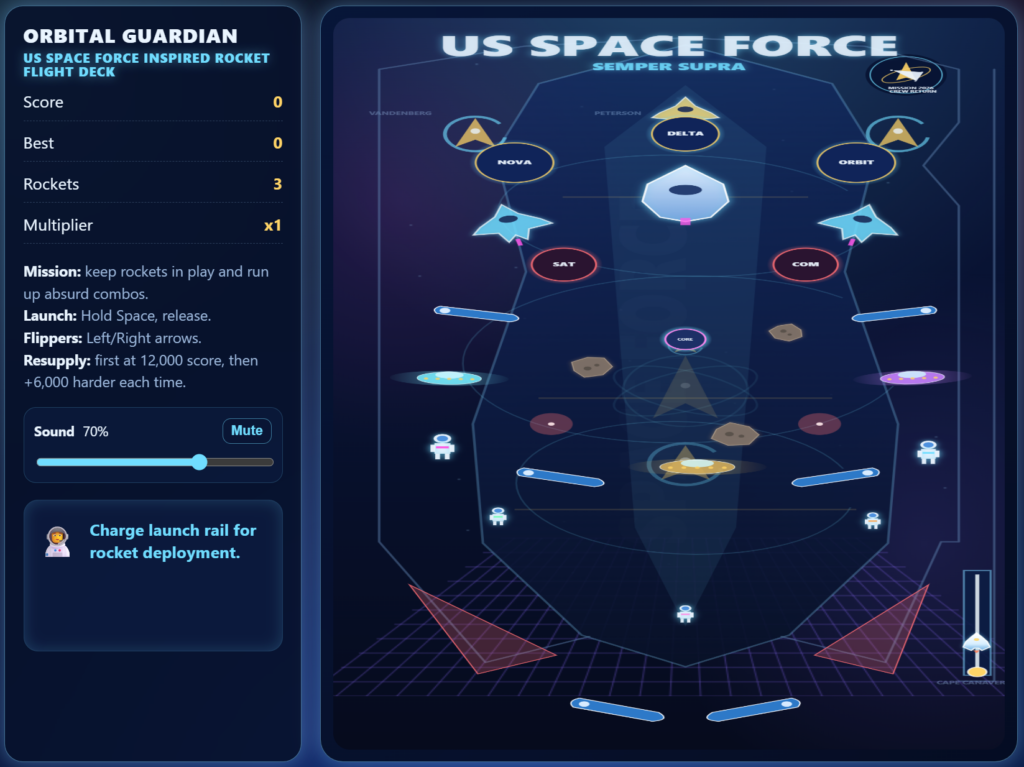
It is not meant to be a production app. That was never the point.
What stood out to me was the engagement model.
Instead of a static training experience, this introduced a lightweight, collaborative loop. People could see their ideas show up almost immediately. Even with limited interaction, it shifted the energy in the room.
It also raises a bigger question.
If a simple pinball game can become a shared artifact during a class, what else could we build this way?
There is something here around crowd-sourced development during live sessions. Not just demos, but evolving tools, simulations, or even training aids shaped by the audience as the session unfolds. Vibe coding lowers the barrier enough that this becomes practical.
I am not sure exactly where this goes yet, but it feels like a direction worth exploring.
Either way, not a bad way to close out the final class.